
☰ Contents

How to use two computers to simulate the same project simultaneously and reduce simulation time?

Problem Description

In large-scale simulations or high-precision computations, the computational capacity of a single computer often fails to meet requirements, resulting in excessively long simulation times. I want to utilize multiple computers to perform parallel computation for a single simulation project to improve efficiency. How should I configure this?

Possible Causes

If you need to run the same simulation project in parallel on two computers, this is considered multi-machine parallel simulation. This feature requires configuring Remote computing resources under the MPI environment in SimWorks FD Solutions software before it can be enabled.
Multi-machine parallel simulation relies on the Message Passing Interface (MPI) standard. MPI provides a standardized programming interface, allowing the same function calls to be used for both multi-process communication on a single machine and communication across multiple computers, greatly simplifying distributed program development.
Mainstream MPI implementations include Open MPI, Intel MPI, and Microsoft MPI.

Solutions

Troubleshooting

Users must correctly configure Remote computing resources in SimWorks FD Solutions to perform multi-machine parallel simulation.

Resolution Methods

Please follow these steps for configuration:
1. Ensure that all computers used for simulation have the same version of the MPI environment installed, with identical installation paths. This document uses Intel MPI as an example. You can download the installer from the Intel MPI.

  • Verify account consistency: Make sure all computers are logged in with the same user account.

2. Install and configure Intel MPI: Here, Intel MPI 2021.16.1 is used as an example. Install it to the same directory on all computers involved in the simulation.

  • Add the installation path (e.g., C:\Program Files (x86)\Intel\oneAPI\mpi\latest\opt\mpi\libfabric\bin) to the Path environment variable. After updating the environment variable, restart the software or command prompt.
  • Run mpiexec.exe from the installation path to enable the Windows Remote Management (WinRM).
  • Configure Trusted IP
    • Press Win + R on the keyboard, enter gpedit.msc to open the Local Group Policy Editor.
    • Navigate to:
      Computer Configuration \rightarrow Administrative Templates \rightarrow Windows Components \rightarrow Windows Remote Management (WinRM) \rightarrow WinRM Client \rightarrow Trusted Hosts.
    • Enable the policy and add the IP addresses of the remote nodes to the TrustedHostsList.
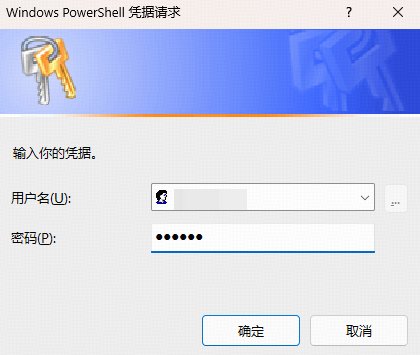
    • In the command line (PowerShell), enter the following command. The IP address can alternatively be replaced with the corresponding hostname. Finally, provide the appropriate account credentials. Press Enter and fill in the login information to confirm whether the remote connection is successful. If the connection is successful, the configuration is complete:
      Enter-PSSession -ComputerName 127.0.0.1 -Credential ***
      

3. Configure Remote resources. For details, refer to Computing Resources.

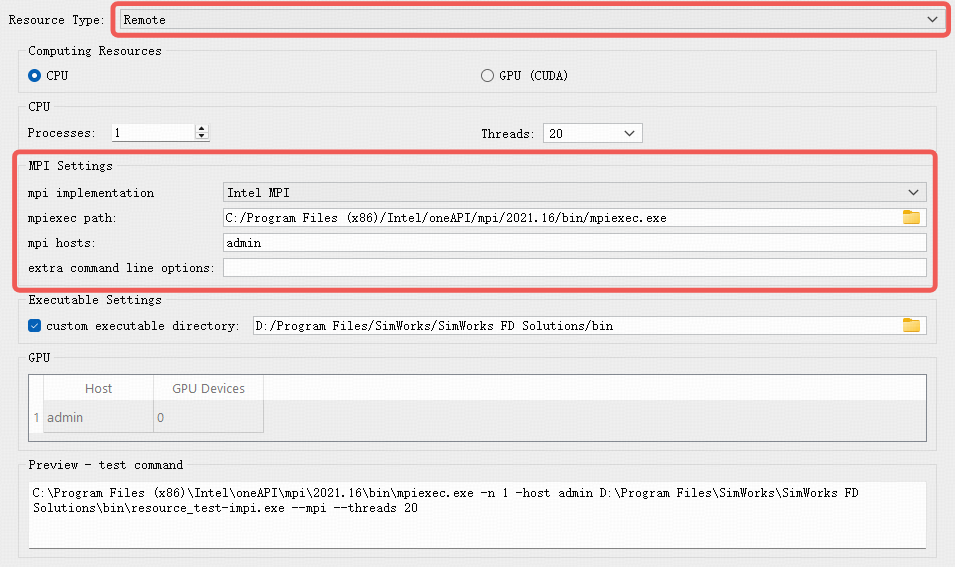
  • Set up Remote resources: On the resources page, select Remote. In the Mpi implementation field, select Intel MPI. In the Mpiexec path field, enter the Intel MPI installation directory. In the MPI hosts field, enter the names or IP addresses of your computers.

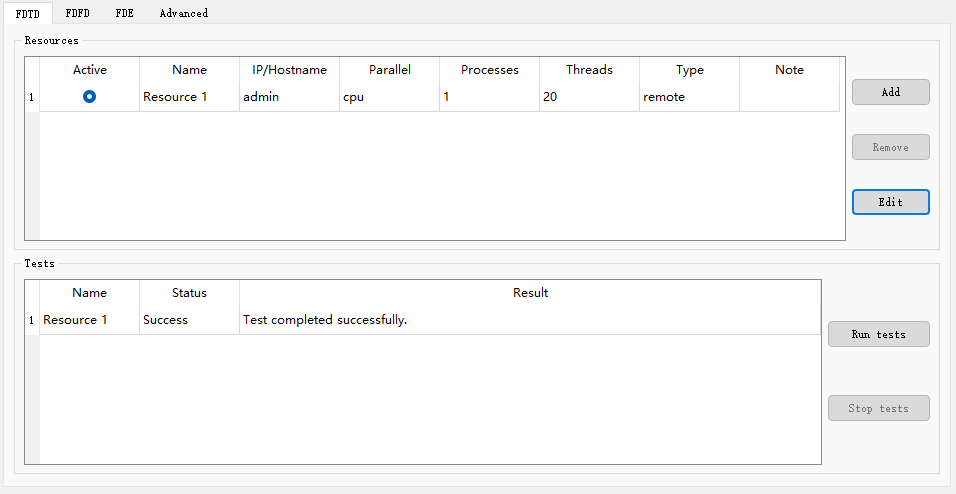
  • Resource validation: After configuration, perform a Resource Test. If the test passes, you can proceed with multi-machine parallel computing."

If the test fails, troubleshoot as follows:
1) Check in Task Manager whether the Intel MPI related services are enabled.
2) Add Intel MPI related executables to the firewall whitelist.

If the issue persists, contact technical support for assistance.

Further Reading

Computing Resources